Water Puppet Show Hanoi
Stories & Heritage

Water Puppet Show Hanoi Story Summary

Vietnam's múa rối nước grew out of flooded rice paddies in the Red River Delta, where villagers made theatre from the harvest season. This water puppet show Hanoi story summary guide sets out what the acts at Thang Long Water Puppet Theatre actually depict, and why they are ordered the way they are. The heritage sits in the lacquered puppets themselves.

11 min read Updated 2026-10-01 Fact-checked
Water Puppet Show Hanoi Story Summary

Quick answer

The show has no single plot: it runs as a chain of short vignettes, each a self-contained folk tale, village scene or legend, closing with the golden turtle that gave Le Loi his sword. The narration and singing are in Vietnamese, so the stories travel through chèo music, drums and puppet gesture. Arriving between 17:00–18:30 leaves time to read the act list beforehand.

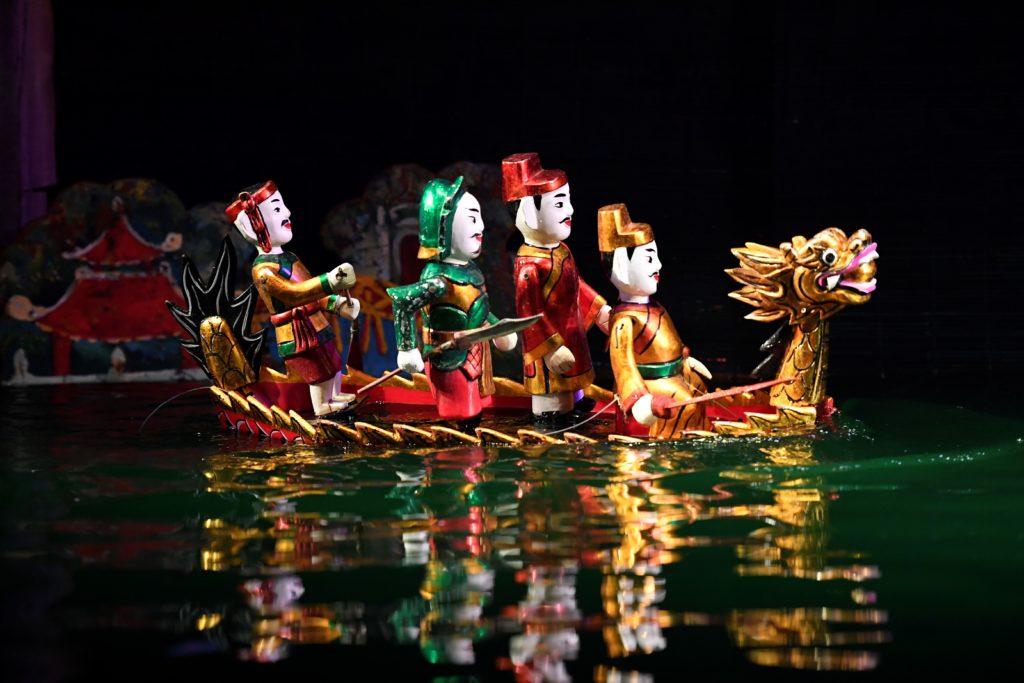
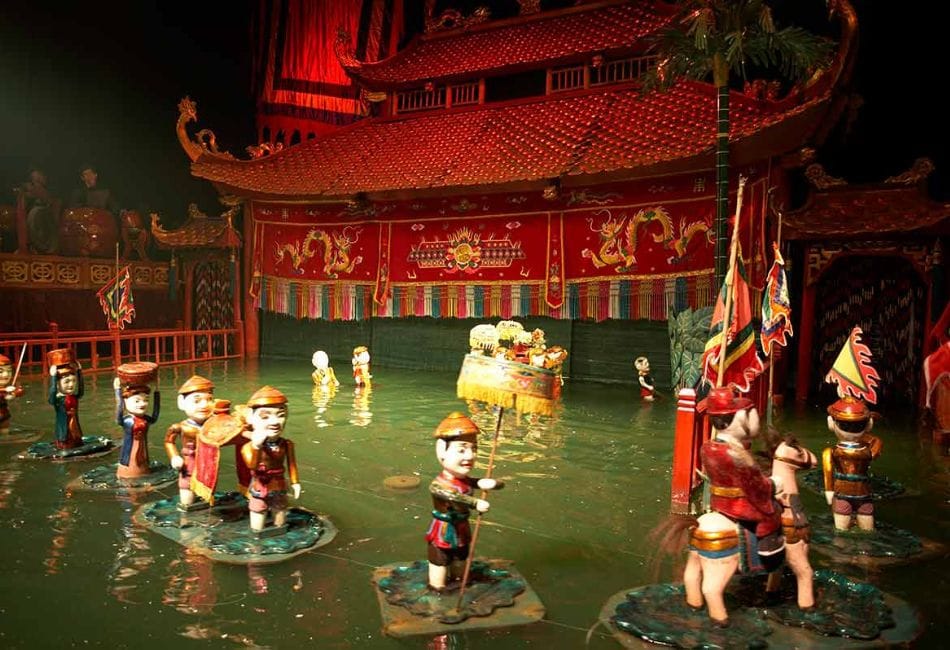
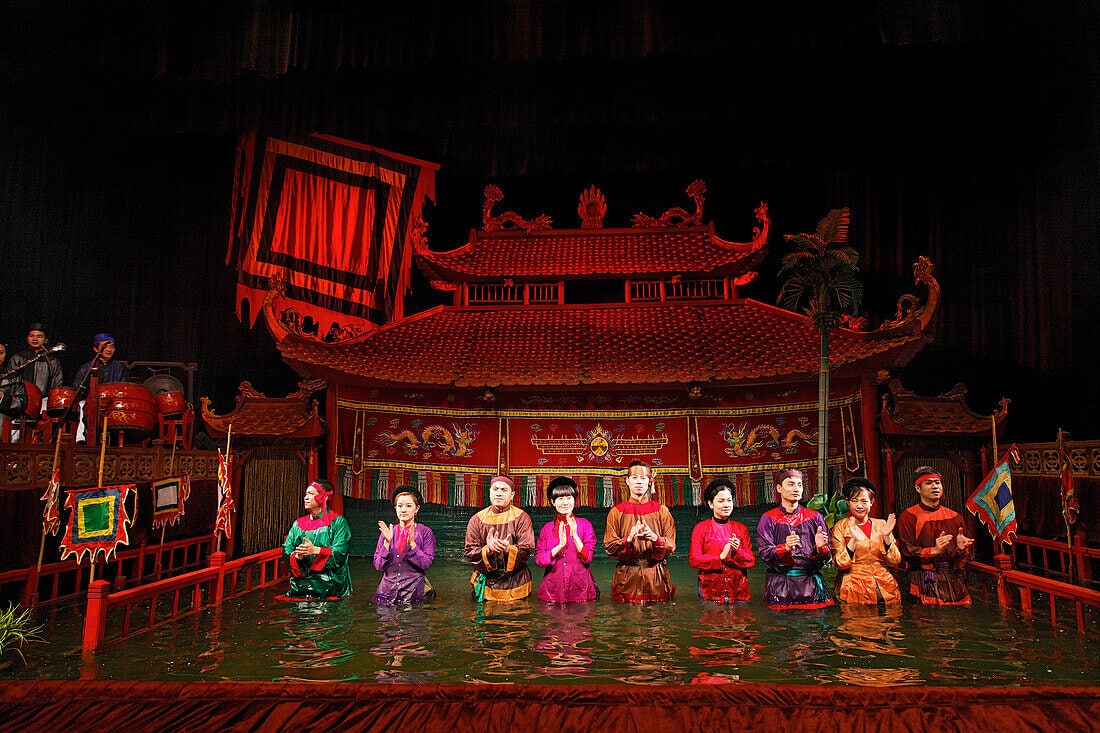
The performers are never visible. At Thang Long Water Puppet Theatre they stand waist-deep behind a split-bamboo screen, working lacquered fig-wood figures through rods and strings hidden beneath the surface of the pool. That concealment is the whole point of múa rối nước, and it explains why a water puppet show hanoi story summary reads as a list of scenes rather than a plot: the stage is a pond, and ponds hold episodes, not chapters. The form came out of flooded rice fields in the Red River Delta, performed at pagoda festivals when the water sat high. Village guilds kept their rigging secret, passing it down within families, which is why regional repertoires still differ. Thăng Long, the old name for Hanoi, anchors the version most visitors see on Dinh Tien Hoang Street beside Hoan Kiem Lake. Reading the show is easier with three anchors: Chú Tễu, the round-bellied clown who introduces the scenes; the chèo ensemble at the side of the pool, whose đàn nhị fiddle and drums carry emotion no carved face can; and the lake legends of Hoan Kiem, which supply the golden turtle that closes most programmes. Agricultural life supplies the rest — planting, fishing, herding, the small comedies of a village year. None of it depends on language, which is why the repertoire survived centuries of largely rural audiences. Visitors who treat the evening as a heritage lesson rather than a spectacle tend to leave with more. The programme sheet names each scene, and skimming it before the lights drop turns a water puppet show hanoi story summary into something closer to annotated listening: the music signals the mood, the puppets handle the action, and the water does the rest. Seats a few rows back keep the whole pool, the screen and the musicians in one frame, which matters when three or four figures move at once. The theatre's position helps too. It stands on the eastern edge of Hoan Kiem Lake, so an evening performance folds easily into a walk through the Old Quarter landmarks that surround it — the night market, the lake causeways, the colonial façades of Dinh Tien Hoang Street. Readers who want the practical layer will find schedules, admission figures and timing advice set out in the dedicated sections further down this page, along with the heritage detail behind individual acts. Seat availability runs through the booking pages.

“The stage is a pond, and ponds hold episodes, not chapters.”
Facts

Cultural Themes and Water Puppet Show Hanoi Story Summary

The stories performed at Thang Long Water Puppet Theatre serve as an allegorical reflection of Vietnamese rural life and spiritual beliefs. These performances utilize puppetry to preserve traditional folklore through symbolic narratives.

1.

Agricultural origins

Water puppetry emerged from flooded rice paddies in the Red River Delta, where villagers created performances to celebrate harvests. The water acts as both the stage and a symbolic element representing the lifeblood of agrarian society.

2.

Mythical creatures

Legends of dragons, phoenixes, and unicorns frequently appear to symbolize prosperity, power, and harmony. These creatures are central to many stories, reflecting the deep-seated respect for nature and spiritual guardians in Vietnamese culture.

3.

Historical figures

Performances often depict national heroes and historical leaders who defended the country. These tales serve as a medium for passing down patriotism and historical memory to younger generations.

4.

The character Teu

Chu Teu is a recurring puppet character who acts as the narrator or master of ceremonies. He represents the common person, often using wit and humor to provide social commentary on village life.

5.

Daily village activities

Many sketches portray mundane tasks such as duck herding, fishing, and rice planting. These scenes document traditional work methods that have defined the lifestyle of Vietnamese farmers for centuries.

6.

Festivals and rituals

Puppet acts frequently recreate community celebrations, including dragon dancing and musical performances. These portrayals offer insight into the social cohesion and ritualistic practices of historical Vietnamese villages.

7.

Supernatural encounters

Stories often blend reality with the supernatural, featuring spirits and deities who interact with mortals. This narrative style highlights the syncretic nature of Vietnamese folk beliefs.

History

Historical Origins Behind the Water Puppet Show Hanoi Story Summary

Water puppetry emerged in the Red River Delta during the eleventh century, when monsoon floods submerged rice paddies for months each year. Farmers carved wooden figures and manipulated them in standing water, transforming agricultural hardship into communal entertainment. The earliest documented reference appears in a 1121 royal chronicle describing puppeteers performing on a flooded courtyard for King Lý Nhân Tông. By the fifteenth century, village festivals across northern Vietnam featured dedicated water stages—rectangular ponds with bamboo curtains separating performers from audiences. The Lê dynasty court adopted the form in the sixteenth century, commissioning elaborate scripts depicting military victories and dynastic myths. Rural troupes preserved oral traditions alongside these courtly narratives, staging creation legends and harvest celebrations at pagoda ponds. French colonial ethnographers documented performances in Hanoi suburbs during the 1880s, noting the carved dragons and phoenixes that have remained standard characters. The art form declined sharply in the mid-twentieth century as warfare and collectivization disrupted village networks. The water puppet show hanoi story summary centers on the 1969 establishment of Thang Long Theatre as the first permanent urban venue. Hanoi authorities recruited master puppeteers from rural cooperatives to preserve techniques at risk of disappearing. The theatre standardized a seventy-minute repertoire drawn from traditional village acts, including "The Dancing Phoenix" and "Buffalo Fight," which rural troupes had performed for centuries. Touring productions in the 1990s introduced international audiences to the form, while the original Hoan Kiem District stage maintained nightly schedules. Today's Thang Long performances preserve the split-bamboo control rods and lacquered figures documented in nineteenth-century accounts. The submerged stage mechanics—wooden poles extending through chest-deep water—replicate the flooded-paddy origins of this uniquely Vietnamese tradition. Visitors at 57B Dinh Tien Hoang witness the same dragon-birthing sequence and rice-planting choreography that villagers staged eight centuries ago.

11th c.

Water puppetry originates in Red River Delta flooded paddies as farmers carve wooden figures for communal entertainment

1121

Royal chronicle records water puppet performance for King Lý Nhân Tông on flooded palace courtyard

15th c.

Village festivals across northern Vietnam establish dedicated water stages with bamboo curtains separating performers from audiences

16th c.

Lê dynasty court commissions elaborate scripts depicting military victories, while rural troupes preserve oral harvest legends

1880s

French colonial ethnographers document performances in Hanoi suburbs, recording carved dragon and phoenix characters still used today

1969

Hanoi authorities establish Thang Long Theatre as first permanent urban venue, recruiting master puppeteers from rural cooperatives

1990s

International touring productions introduce global audiences to water puppetry while Hoan Kiem stage maintains nightly traditional repertoire

Present

Thang Long performances at 57B Dinh Tien Hoang preserve split-bamboo control rods and submerged stage mechanics replicating eleventh-century flooded-paddy origins

What to see

Performance Scenes in the Water Puppet Show Hanoi Story Summary

The Thang Long Water Puppet Theatre performance consists of a series of short sketches that bring traditional Vietnamese folktales and rural life to the water stage. Each act utilizes intricate puppetry techniques controlled from behind a bamboo screen.

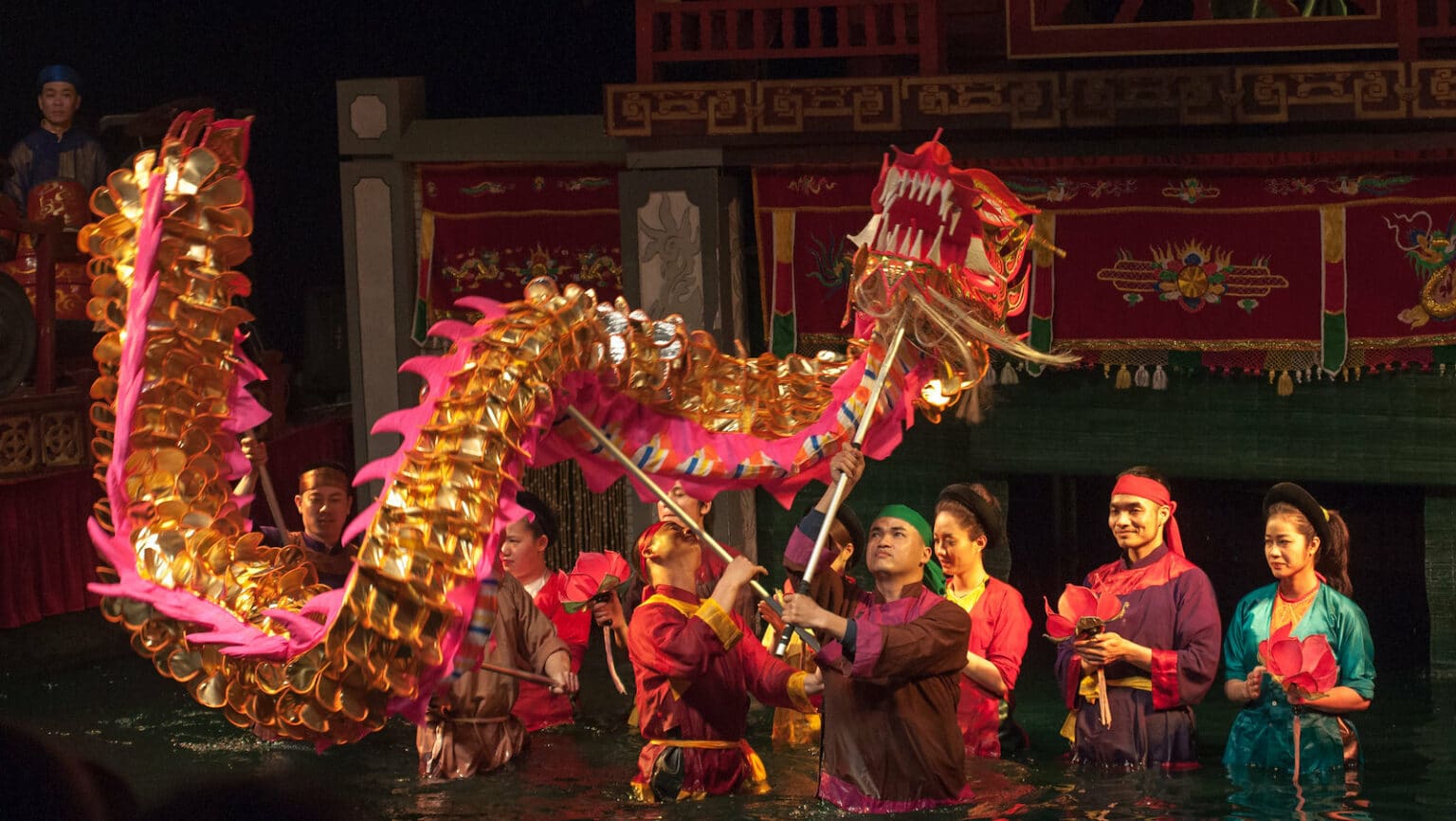
Dragon Dance

Dragon Dance

Two dragons emerge from the water, twisting and spiraling while emitting smoke and fire effects. This performance signifies power and prosperity in Vietnamese culture.

Watch for the coordination between puppeteers and water-based pyrotechnics.
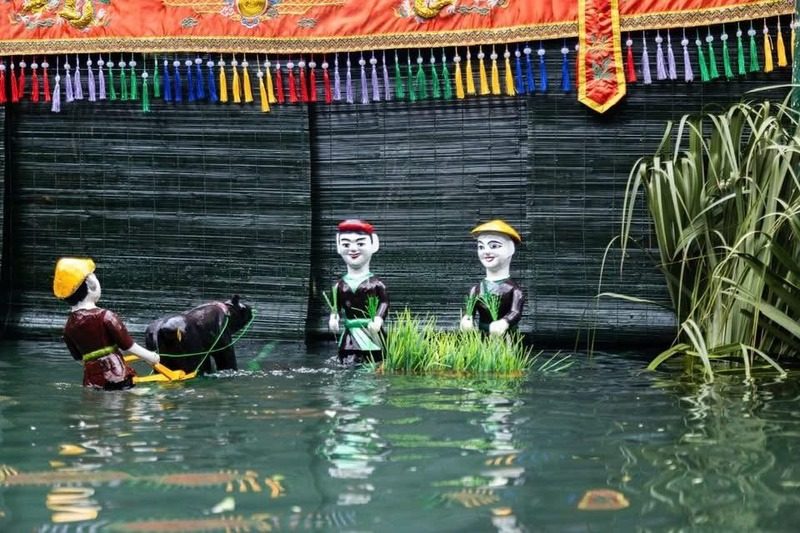
Agricultural Scenes

Agricultural Scenes

These segments depict farmers cultivating rice, herding buffalo, and fishing in the countryside. The scenes illustrate the connection between the villagers and their water-based environment.

Observe the small-scale mechanical movements of the buffalo and farmers.

Legend of the Restored Sword

Legend of the Restored Sword

This act reenacts the legend of Emperor Le Loi, who received a sword from a Golden Turtle to defend the country. It serves as a narrative piece central to Hanoi history.

Focus on the emergence of the turtle puppet from the water.

Village Festival Activities

Village Festival Activities

Puppets portray celebratory activities such as boat racing, wrestling, and folk dancing. These segments capture the spirit of community gatherings during traditional holidays.

Notice the rhythmic motion of the puppets during the group dances.

Opening hours

Opening Hours for the Water Puppet Show Hanoi Story Summary

The Thang Long Water Puppet Theatre maintains consistent operating hours throughout the week to accommodate visitors interested in the cultural history of the performances.

Monday
09:00–21:00
Tuesday
09:00–21:00
Wednesday
09:00–21:00
Thursday
09:00–21:00
Friday
09:00–21:00
Saturday
09:00–21:00
Sunday
09:00–21:00
Visitors are encouraged to check the performance schedule at the theatre or official website to ensure admission before the final show of the day.
Timing

Recommended Arrival for the Water Puppet Show Hanoi Story Summary

The optimal arrival window for attending the water puppet show is 17:00–18:30. This timing allows visitors to enjoy the performance while aligning perfectly with the evening transition of the surrounding Old Quarter.

Spring (Mar-Apr)

Moderate crowds

Mild and humid, 20-25°C

Experience pleasant weather ideal for walking between the theater and local landmarks.

Autumn (Oct-Nov)

High crowds

Cool and dry, 22-27°C

This period offers the most comfortable temperatures for exploring the district before the show.

Weekday Evenings

Low to moderate

—

Visiting mid-week during the evening hours provides a quieter atmosphere in the surrounding streets.

Summer (Jun-Aug)

Peak crowds

Hot and frequent rain, 27-35°C

Expect higher humidity and potential for short, heavy rain showers throughout the area.

Verdict: The best arrival window is 17:00–18:30 to balance the show experience with evening exploration of the Old Quarter.

Book

Check availability

Frequently asked

Common Questions About the Thang Long Water Puppet Show

Everything you need to know about water puppet show hanoi story summary

What is the typical water puppet show hanoi story summary?

A water puppet show hanoi story summary generally includes scenes of rural Vietnamese life, such as farming, fishing, and folk legends. These performances utilize wooden puppets controlled by puppeteers standing waist-deep in a liquid stage, depicting historical myths and festive activities. The narrative focuses on cultural heritage rather than complex dialogue, making the stories accessible to all viewers.

Is a water puppet show hanoi story summary suitable for children?

Yes, the visual nature of the puppetry and the lively traditional music make the performance engaging for young audiences. While there is no spoken word in English, the colorful characters and dynamic movements convey the meaning of each scene clearly. Families often find this art form a highlights of their visit to the city.

How can I understand the water puppet show hanoi story summary during the performance?

The performances are conducted in Vietnamese, but the plot lines are rooted in universal folk tales that require no translation. Most visitors follow the rhythm of the live musical ensemble and the physical comedy of the puppets to interpret the scenes. You will find that the artistic expression transcends language barriers effectively.

Where can I find the full water puppet show hanoi story summary before attending?

While detailed scripts are rarely provided, you can learn about the history and background of the art at the theater or through informational materials. The performances are designed to be self-explanatory, focusing on iconic Vietnamese motifs like the dragon dance or the legendary return of the sword. The experience is centered on the visual artistry and the skill of the hidden performers.

Do performances change frequently at this Hanoi cultural landmark?

The repertoire follows a traditional set of skits that have been preserved for centuries. While minor adjustments occur, the core thematic elements remain consistent to protect the integrity of this UNESCO-recognized heritage. This ensures that every audience experiences the authentic essence of the craft.

What is the best way to prepare for a visit to this traditional theater?

To prepare, we recommend checking the official website for performance schedules and arrival information. Visiting during the suggested window of 17:00–18:30 allows you to enjoy the show and the atmosphere of the surrounding area. Arriving early helps you settle in and appreciate the historical setting of the theater.

Keep reading

More guides & pages